Heartbreak or True Love - You get it all with Pinot Noir

Wine Reviews

Heartbreak or True Love - You get it all with Pinot Noir

Expensive, high maintenance but we love it

Somethings are just set in stone. Roast beef and aged Bordeaux, Sauternes and Tarte Tatin and, for me, Christmas Day Turkey and a great bottle of Burgundy. While many reach for something bigger and bolder, there really is only one red wine possesses the complexity, balance, and sheer elegance to handle the glorious, messy, flavour-packed anarchy of the Christmas plate.

Pinot Noir: The Heartbreak that Leads to Rapture

There is a trade off that must be considered when choosing Burgundy, and that’s the Pinot Noir grape itself. This delicate varietal is notoriously demanding, always seeming to be one poor viticultural choice away from disaster, earning its reputation as The Heartbreak Grape for a reason.

It’s prone to disease, highly sensitive to climate, and notoriously fussy in the cellar. Many an aspiring vigneron has torn their hair out over this thin-skinned, high-maintenance beauty. Yes Bordeaux has it’s consistent blends each year and a bad Pinot can be alarmingly thin, astringent, and disappointing—a bitter reminder of a costly mistake.

Yet, when conditions are right, and the terroir of the Côte d'Or works its magic, Pinot Noir delivers an experience unmatched by any other red. It achieves the miraculous: a wine that is light in colour but immense in complexity. It sings with notes of crushed wild strawberry, black cherry, dried rose petals, and that alluring, savoury scent of damp earth, what we call sous-bois to sound more elegant. When you find that perfect bottle, you realize why every winemaker risks the heartache—it is, undeniably, the best red grape in the world.

"Yes Bordeaux has it’s consistent blends each year and a bad Pinot can be alarmingly thin, astringent, and disappointing—a bitter reminder of a costly mistake.
Yet, when conditions are right, and the terroir of the Côte d'Or works its magic, Pinot Noir delivers an experience unmatched by any other red.
"

Christmas dinner is the ultimate high-wire act for wine. You need a red that can harmonize with the lean, white turkey breast, stand up to the rich, dark meat, and most critically, integrate seamlessly with the myriad of complex side dishes—from the sweet-tart cranberry sauce to the deeply savoury stuffing and rich gravy.

A tannic Cabernet will bully the turkey and turn the cranberries metallic. A simple light red will be crushed under the weight of the sauces.

Red Burgundy is the sophisticated solution, the ultimate Christmas diplomat:

  • Tannin Subtlety: Unlike structured new-world reds, Burgundy’s tannins are soft and supple. This prevents the white turkey meat from tasting dry and ensures no harsh clashes with the herbs and spices.
  • Acidity Cleansing: Its naturally high and bright acidity is the unsung hero of the feast. It cuts brilliantly through the fat and richness of the gravy and all the buttery sides, acting as a crucial palate cleanser between every glorious, gluttonous bite.
  • Savoury Connection: The earthy, mushroom-like complexity of a great Burgundy is the exact aromatic complement to the traditional Christmas roast ingredients—the sage in the stuffing, the roasting potatoes, and the general comforting aroma of a well-seasoned holiday bird.

This Christmas Day, choose finesse over brute force. Pour a glass of elegant, perfectly balanced Red Burgundy. It will deliver a flavour experience that is both sophisticated and profoundly comforting, proving that the Heartbreak Grape is capable of nothing less than pure, unadulterated joy on the most important dinner of the year.

Pinot Noir
Pinot Noir

Pinot Noir

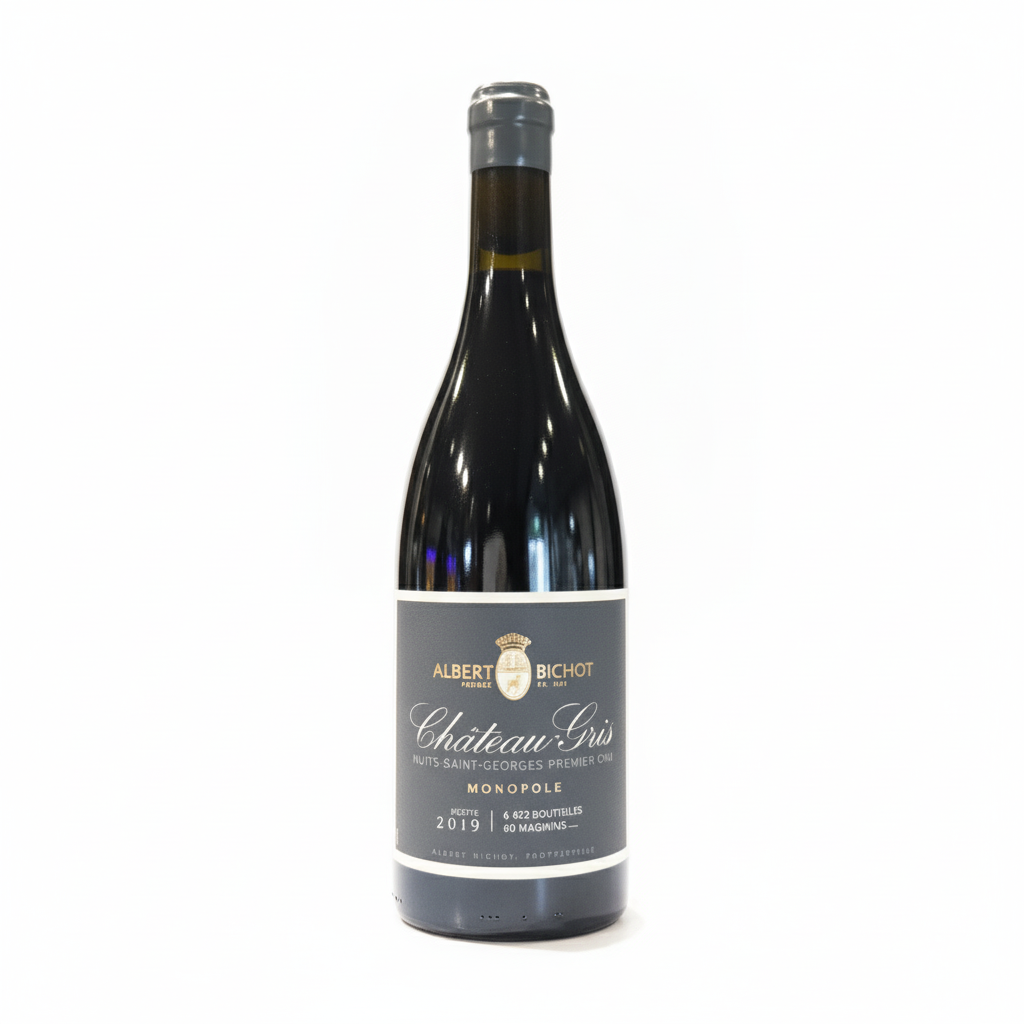
Johnny’s Christmas Day Pick - Albert Bichot Nuit-Saint-Georges 1er Cru ‘Chateau Gris’ 2019

If you want the heartbreak hotel for the heartbreak grape then Nuits-Saint-Georges is the place. When she is good she is very, very good. But when she is bad…it’ll be at least another year before you trust me to try pinot noir again!

You are in safe hands with this one though

About since 1831, Maison Albert Bichot is one of the most respected negoce of Burgundy. Loyal custodians of historic domaines like Long-Depaquit in Chablis, Clos Frantin for the Nuits, a relentless attention to detail has improved the quality of wine across the range to non end.

This particular gem comes from the famed Château-Gris, a monopole (single-owner vineyard) perched on a slope west of Nuits-Saint-Georges. The name itself is pure Burgundy whimsy. Most roofs in the region sport colourful glazed tiles, but the Château Gris roof is covered in grey (gris) slate. The locals nicknamed it, and thanks to a court decision in the 1920s (because of course, there was a court decision), the name stuck, pushing aside the original plot name, "Les Crots.” Tucked up on terraces between 260 and 330 metres, the 35 to 40-year-old Pinot Noir vines cling to calcareous clay soils, benefitting from that coveted eastern exposure.

Forget the popular misconception that Nuits-Saint-Georges is all brawn and no beauty. This wine is a masterclass in distinguished smoothness. The taste provides a core of red and black fruits—raspberry, blackcurrant, and strawberry lifted by rose, violet, and peony, like walking into a dimly lit, ancient stone cellar carrying a freshly picked bouquet. The hint of oak (just 35% new wood for 16-17 months) is merely there to bring everything together and remind you that your are drinking something serious.

The Albert Bichot Nuits-Saint-Georges 1er Cru Château Gris is a wine that proves you can be a venerable institution, spanning centuries, and still be remarkably current. It's a Pinot Noir that eschews the brooding rusticity often associated with Nuits-Saint-Georges for a high-definition elegance.

Is it a serious wine? Undeniably. Expensive? Absolutely, what else do we expect from Burgundy. But its also easily the best wine I’ve drank this year and makes it worth it for me.

Turkey Roulade with Confit Turkey Leg, Pork and Cranberry Stuffing

Confit Turkey Leg

  • 2 large turkey legs (thigh and drumstick attached)
  • 1 kg duck fat (enough to fully submerge the legs)
  • 4-6 cloves garlic, smashed
  • 4 sprigs fresh thyme
  • 4 sprigs fresh sage
  • 2 bay leaves
  • 2 tbsp coarse salt
  • 1 tsp black peppercorns

Pork & Cranberry Stuffing

  • 30g unsalted butter
  • 1 small onion, finely diced
  • 2 stalks celery, finely diced
  • 200g ground pork sausage meat
  • 100g fresh breadcrumbs
  • 50g dried cranberries, roughly chopped
  • 1 tbsp fresh sage, chopped
  • 1 tsp fresh thyme leaves
  • 1 large egg, lightly beaten
  • Salt and freshly ground black pepper to taste

Turkey Roulade

  • 1 boneless, skinless turkey breast, about 1 kg
  • Prepared Pork and Cranberry Stuffing and Confit leg mixture
  • 1 pack of smoked streaky bacon
  • Salt and freshly ground black pepper
  • 2 tbsp olive oil or reserved confit fat


Part 1: Confit Turkey Leg (Start 1-2 Days Ahead)

Confit involves slowly cooking the meat in fat to make it incredibly tender. This is best done in advance.

  1. Cure: Rub the turkey legs generously with the salt and pepper. Place in a container, cover, and refrigerate for 12-24 hours. Rinse them well under cold water and pat them completely dry before proceeding.
  2. Melt Fat: Preheat oven to 120°C. In a deep oven-safe pot or Dutch oven, melt the duck fat.
  3. Confit: Add the dried turkey legs, garlic, thyme, and bay leaves to the pot. The fat must completely cover the meat; add more if necessary.
  4. Slow Cook: Transfer the pot to the preheated oven and cook for 3 to 4 hours, or until the meat is falling off the bone.
  5. Cool and Shred: Carefully remove the legs from the fat. Once cool enough to handle, remove the skin and bones. Shred the confit turkey meat and set it aside. (Strain the fat and save it for roasting potatoes or future confit.)

Part 2: Pork and Cranberry Stuffing

  1. Sauté Aromatics: Melt the butter in a skillet over medium heat. Add the onion and celery and sauté until softened, about 5 minutes.
  2. Brown Sausage: Add the pork sausage meat to the skillet, breaking it up with a spoon. Cook until browned, then drain off any excess fat.
  3. Combine Stuffing: In a large bowl, combine the sausage mixture, breadcrumbs, cranberries, sage, thyme, egg, salt, and pepper. Mix well until everything is evenly combined.
  4. Combine the stuffing with the shredded confit leg meat and mix thoroughly

Part 3: Roulade Assembly and Roasting

  1. Prepare Turkey Breast: Lay the turkey breast on a cutting board. Butterfly out the breast then cover it with plastic wrap and, using a meat mallet, pound it to an even thickness of about 1/2 inch (1.25 cm). Season generously with salt and pepper.
  2. Layer Meat and Stuffing: Spread the stuffing mixture evenly over the flattened turkey breast, leaving a 1-inch border around the edges.
  3. Roll the Roulade: Starting from a short end, tightly roll the turkey breast into a log
  4. Wrap the roulade with the streaky bacon
  5. Tie and Sear: Secure the roulade tightly with butcher's twine at 1-inch intervals. Heat the olive oil or confit fat in a large, oven-safe pan or roasting dish over medium-high heat. Sear the roulade on all sides until nicely browned, about 8-10 minutes total.
  6. Roast: Preheat your oven to 180°C (350°F).2 Transfer the pan to the oven and roast for 45-60 minutes, or until an instant-read thermometer inserted into the center of the roulade reaches 74°C (165°F).
  7. Rest and Slice: Remove the roulade from the oven, tent loosely with foil, and let it rest for 10-15 minutes.3 This is crucial for the juices to redistribute.
  8. Serve: Remove the twine, slice the roulade into thick rounds, and serve with any pan juices or your favourite gravy.